Computational Exploration of Magical and Divinatory Language
SFPC Music / Sound Studies 2020
magic words as material phoneme-to-grapheme models ineffable meanings linguistic expression as space divinatory ontologies semantic space of Tarot generative adversarial networks for language ad-hoc ontologies
View syllabus ↗
full cluster →
01
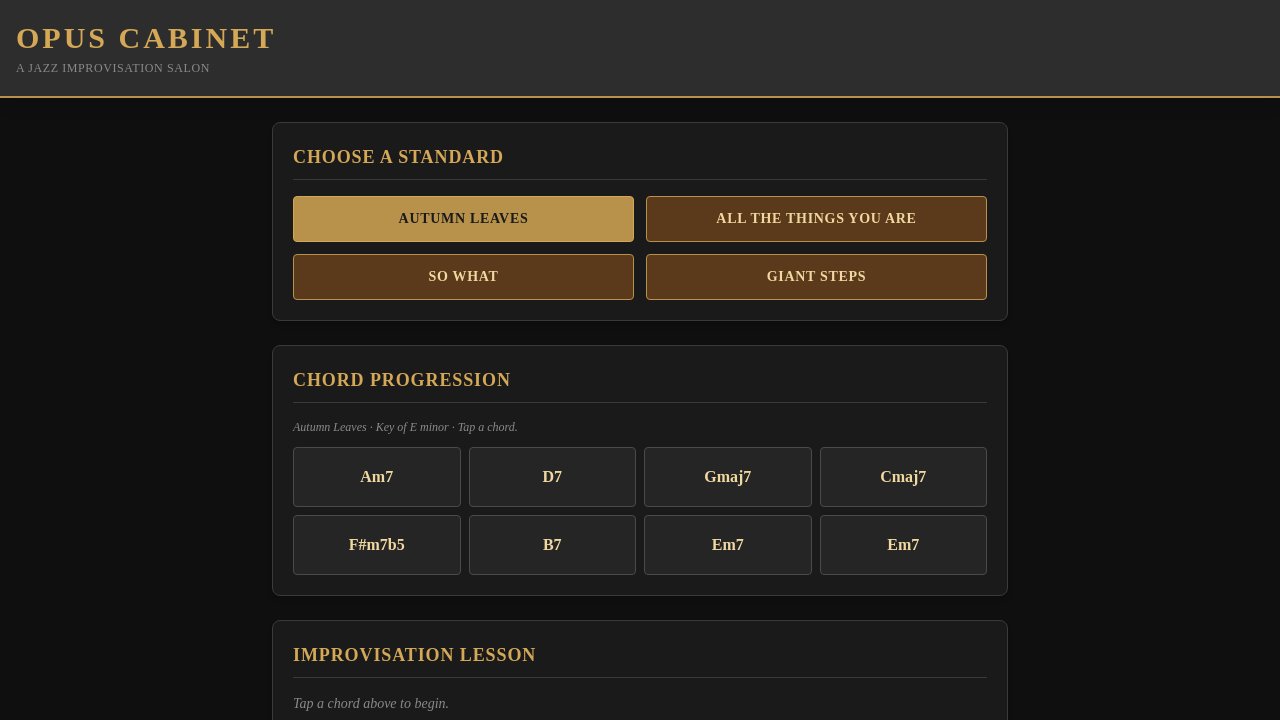
Jazz Improv Explainerlive
Pick a jazz standard. Trace the chord changes, the modes, how improvisers navigate the form.
Jazz Improv Explainer screenshot
02
Jazz Age Explorerlive
Pick a decade. Key recordings, musicians, venues, social context.
Jazz Age Explorer screenshot
03
Jazz Guidelive
Pick a recording. Get a framework for hearing what's happening.
Jazz Guide screenshot
04
Marginalia Codexlive
Pick a genre. Who made it, who consumed it, what it meant to its community.
Marginalia Codex screenshot
05
Improv Traditionslive
Jazz vs. Indian classical, free jazz vs. gamelan — how each approaches the individual-ensemble relationship.
Improv Traditions screenshot
full cluster →
01
Oulipo Workshoplive
Lipogram, N+7, snowball — write under the constraint, see how Oulipo used it.
Oulipo Workshop screenshot
02
Chance Workshoplive
Random word, dice roll, newspaper cut-up — how chance shapes authorship.
Chance Workshop screenshot
03
Authorship Codexlive
Human-written, human-assisted, or AI-generated? What does the distinction mean for authorship?
Authorship Codex screenshot
04
Procedural Workshoplive
Describe a pattern. Apply it. See how constraints produce unexpected writing.
Procedural Workshop screenshot
05
Sigil And Signlive
Tarot, I Ching, runes — how divinatory systems create meaning.
Sigil And Sign screenshot

Build flashcard decks, quiz tools, or study apps for any of these topics — no code needed.

Try Vibes DIY

Stay in the loop

Get notified when we publish new templates and tools.

Make your own on vibes.diy →