Shared Rituals, Real Trust.
Most communities don't need enterprise software. They need tools that respect the shape of how they already live.
There was a moment in the early internet when software felt different.
Not smarter.
Not more optimized.
More human.
People stayed in strangers' homes through Airbnb.
They edited Wikipedia with no expectation of ownership.
They hosted each other on couches.
They uploaded weird music.
They ran forums for obscure hobbies.
They built open-source software with people they had never met.
This was not because the technology was advanced.
It was because the social boundary was still visible.
The people using these systems felt:
- culturally aligned
- experimentally minded
- mutually legible
- part of the same horizon
The software did not create trust from nothing.
It amplified trust that already existed.
Over time, the internet became optimized for scale instead of scenes. Platforms stopped feeling like places where communities coordinated themselves and started feeling like feeds competing for attention.
The result was software that became very good at engagement and very bad at belonging.
But underneath all of this, people never stopped organizing themselves.
House show networks still route touring bands through cities.
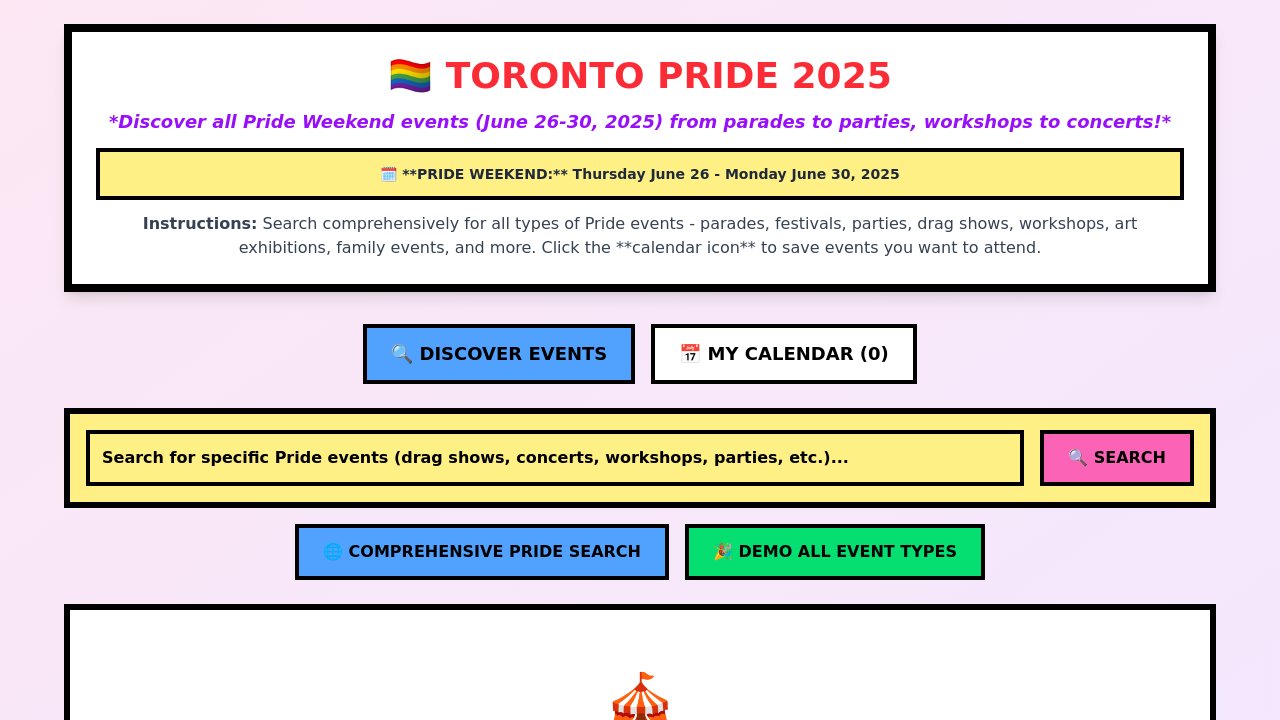
Event Finder for a City's Scene
Searches the open web for parades, parties, and shows in a city, then saves them to a shared calendar. The scene already exists — the app just learns to read it.
Parents still coordinate carpools.
Restaurants still swap shifts in group chats.
End-of-Shift Cash & Tip Board
Closers enter cash, card total, tip pool, voids. The app flags discrepancies and stores a per-closer sign-off. The handoff already happens — the app gives it memory.
Neighborhoods still improvise mutual aid during storms.
Shelter & Food Bank Finder
A bilingual directory of shelters, food banks, and transit help — with offline mode and a QR share. Built so the people doing the work can hand it to anyone, anywhere.
Friends still run trips, events, projects, rituals, clubs, scenes, and subcultures through spreadsheets and text threads.
Potluck Signup Board
Who's bringing what, with dietary tags and a button to claim a missing category. The ritual is older than the internet. The board just stops the duplicate desserts.
Clone this and describe your version — monthly book club, camping trip, holiday party — the shape is the same.
The coordination already exists.
The software just rarely respects its shape.
Most tools assume the wrong shape.
Most tools assume:
- hierarchy
- scale
- monetization
- formal process
- endless onboarding
- account trees
- dashboards
But many real communities operate differently.
They run on:
- trust
- reputation
- repeated interaction
- lightweight norms
- shared context
- recurring rituals
Holiday Card Roster
Per-year columns of sent, received, skipped. A small artifact of a household's repeated interaction — the kind of memory most software forgets.
These groups do not need enterprise software.
They need social infrastructure.
Not social media.
Social infrastructure.
That distinction matters.
Social media extracts attention from communities.
Social infrastructure strengthens communities.
One turns people into audiences.
The other helps them coordinate their lives together.
Why we care about collaboration signals, not clicks.
A click tells you:
"someone was curious."
A share tells you:
"someone saw themselves and their people in this."
That is a much deeper signal.
When someone immediately invites collaborators into a tool, something important is happening:
- the workflow is real
- the trust network already exists
- the software fits the social shape
- the ritual wants infrastructure
Seder Run-of-Show
Ordered steps with times and notes — when each dish goes in, who reads which passage — saved as a reusable template for next year. The host already knows the shape. The app just remembers it.
Clone it and describe your ritual — Thanksgiving, Diwali dinner, quarterly family reunion — the structure holds for any recurring event.
Invisible institutions, waiting to become legible to themselves.
The internet is full of invisible institutions waiting to become legible to themselves.
Every scene already has:
- memory
- rituals
- coordination patterns
- identity
- governance
- trust
What they often lack is software that feels native to the way they already live.
That is the opportunity now.
Not building software for "users."
Building software for scenes.
Shared rituals. Real trust.
