Public Health

Epidemiology &
Study Design

Tools for exploring cohort studies, case-control designs, confounding, and outbreak investigation — drawn from MIT, Stanford, UC Berkeley, UNC Chapel Hill, and UW curricula.

cohort study designcase-control study designconfoundingselection biaseffect modificationdirected acyclic graphsmeasures of associationoutbreak investigationdisease surveillanceobservational study analysiscross-sectional studiesevidence-based public health
Exploration tools
01
Live

Study Design Drill

Cohort, case-control, or cross-sectional? Map real questions to the right design.

Practice mapping public health questions to study designs: pick among cohort study design, case-control study design, and cross-sectional studies for each scenario, justify your choice, name the measure of association produced, and flag one source of selection bias.

02
Live

Outbreak Tracker

Case definition, line list, odds ratios — work the cluster together.

Coordinate a local outbreak investigation: draft the case definition, collect exposure histories, build the working line list, compute odds ratios for candidate exposures, and produce a structured final report following standard outbreak investigation conventions.

03
Live

Surveillance Workflow

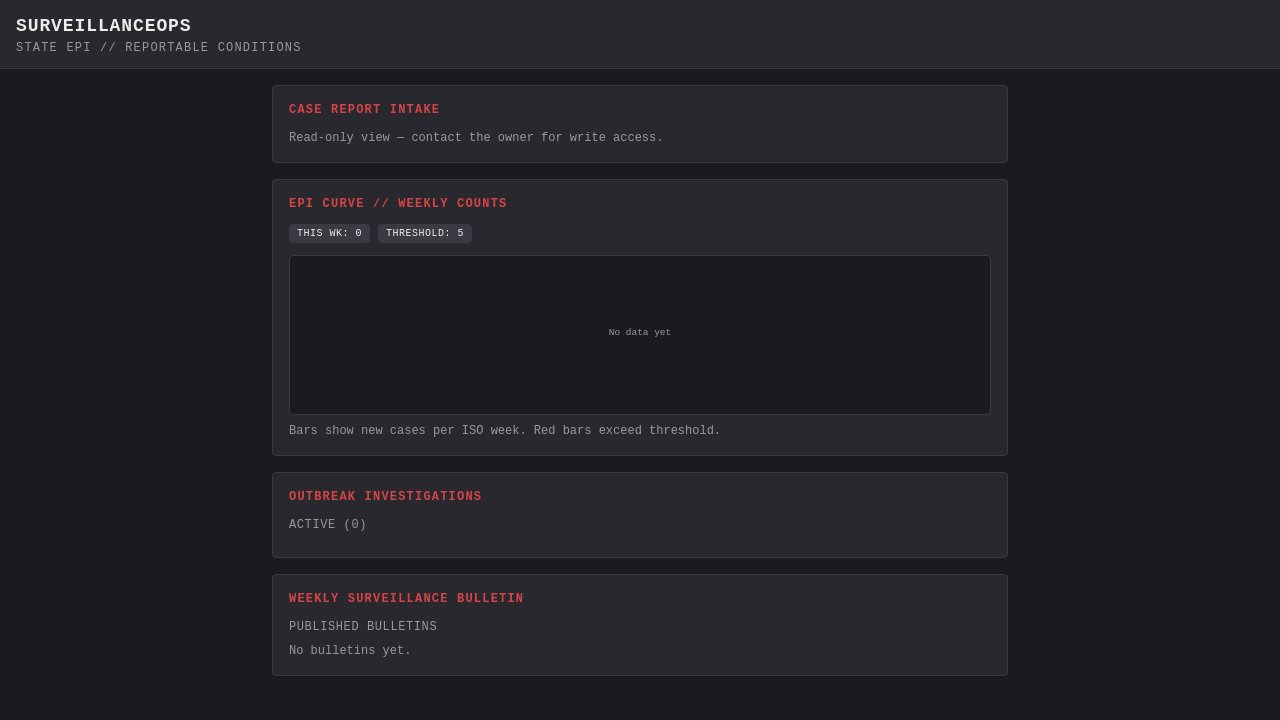
Weekly counts, threshold flags, open investigations — one workflow for all reportable conditions.

Track reportable disease cases week over week: compute incidence rates against historical baselines, flag conditions exceeding thresholds, manage open outbreak investigations, and produce the weekly surveillance bulletin — all in one workflow.

04
Live

Analysis Plan

DAG, adjustment set, measure of association — pre-register before touching the data.

Pre-register an observational study analysis on a long-running cohort. Draw the directed acyclic graph, identify the minimal sufficient adjustment set, specify heterogeneity analysis by sex and race, document threats to validity, and produce a time-stamped pre-analysis plan for public registry.

05
Live

Evidence Synthesis

Every study classified. Every effect modification surfaced. Every finding graded.

Synthesize epidemiologic evidence for a public health guidance document: classify each study by design, extract measures of association and confounding handling, surface effect modification across studies, and produce the strength-of-evidence grade with dissenting opinions.

Make your own on vibes.diy →